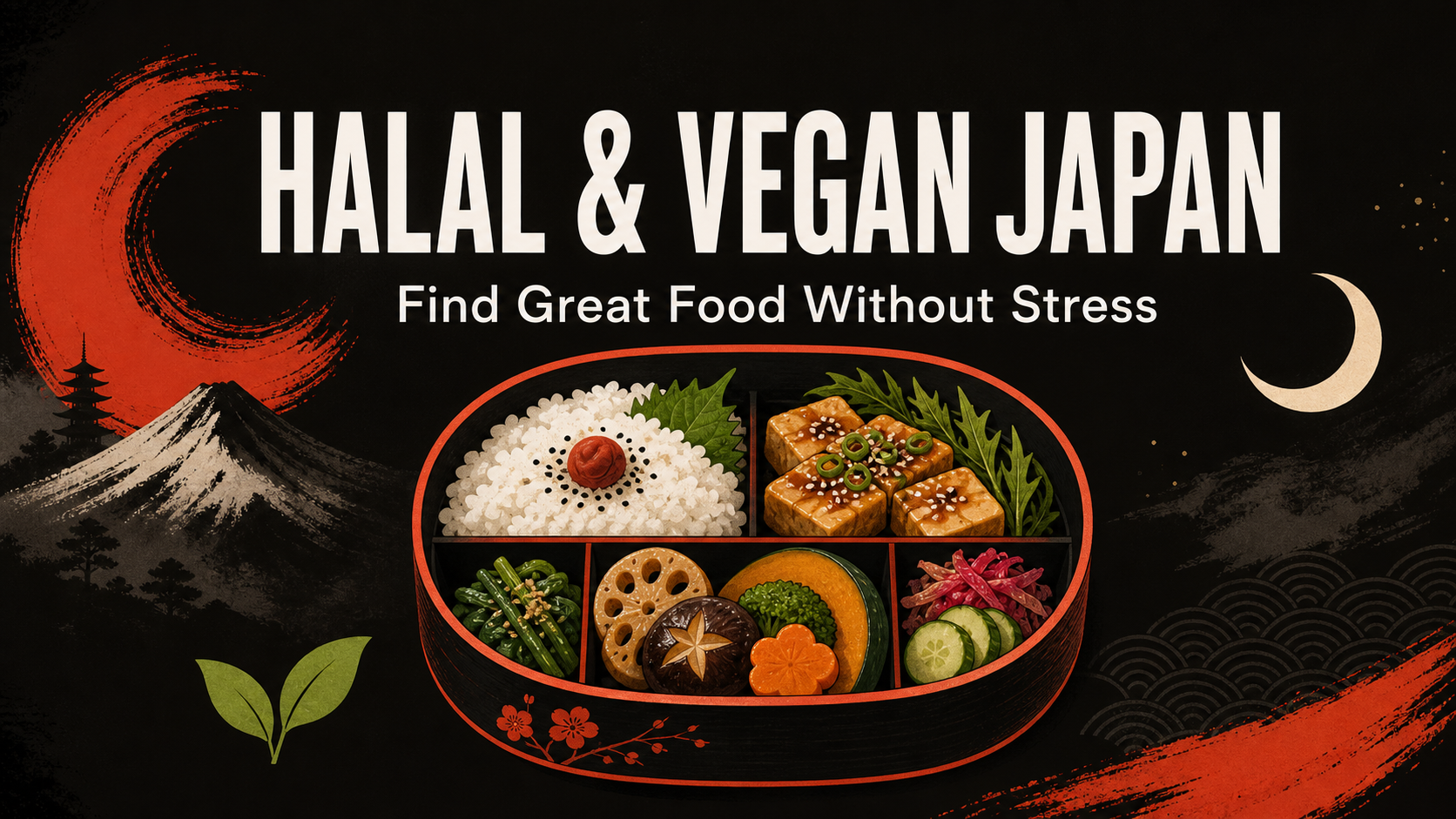
Halal, Vegetarian & Vegan in Japan: How to Eat Well Without Stress
Eating halal, vegetarian, or vegan in Japan is absolutely possible — but it requires knowing how to ask, where to look, and what traps to avoid. This guide covers everything from reading menus to finding certified restaurants.
The Reality of Dietary Needs in Japan (Honest Assessment)
Japan is not naturally a vegetarian or halal-friendly destination in the way that, say, Indonesia or India might be. A few realities to understand upfront:
Fish stock is everywhere. Dashi (Japanese soup stock) forms the flavor foundation of enormous amounts of Japanese cooking — from miso soup to ramen broth to the sauce in many vegetable dishes. Classic dashi is made from katsuobushi (bonito/tuna flakes) and/or niboshi (dried sardines). Even a dish with no visible meat may contain animal-derived dashi.
Mirin and sake are standard cooking ingredients. Both are alcohol-derived. They appear in marinades, glazes, sauces, and braises in most traditional and restaurant cooking.
English menus are improving but still patchy. In tourist hubs and upscale restaurants, English is common. In local neighborhood restaurants, a Japanese dietary card is your best communication tool.
The situation is improving rapidly. Japan's tourism industry has made deliberate efforts to expand dietary-friendly options ahead of major international events. Apps, certified restaurant directories, and specialist food tours are far more developed than they were five years ago.
Halal Eating in Japan
What Halal Certification Means in Japan
Halal certification in Japan is administered by various bodies, with standards varying between certifiers. The most common certification you'll see comes from the Japan Halal Association, the Islamic Center Japan, or the JAKIM-recognized equivalent. Look for the specific certification badge on restaurant signage or apps.
A growing category of restaurants market themselves as "Muslim-friendly" without full halal certification — meaning they may avoid pork and alcohol in ingredients but cannot guarantee zero cross-contamination. For travelers who require strict certification, always verify the specific certifier.
Where to Find Halal Restaurants
Halal Gourmet Japan (halalguide.info): One of the most comprehensive English-language databases of halal-certified and Muslim-friendly restaurants in Japan. Searchable by city, cuisine, and certification level.
Zabihah.com: International halal restaurant database with Japan coverage.
Mosque information boards: Tokyo Camii (the central mosque in Yoyogi-Uehara, Tokyo) and other major mosques often maintain bulletin boards and staff who can recommend nearby halal options.
Muslim-friendly areas in Tokyo:
- Shinjuku and Takadanobaba: established concentration of halal restaurants
- Asakusa: growing halal-friendly options catering to Muslim tourists
- Akihabara area: halal street food stalls have increased
In Kyoto and Osaka: Options are fewer than Tokyo but growing. Check Halal Gourmet Japan for current-listed restaurants in each city.
Prayer Facilities
Tokyo Camii (https://tokyocamii.org/en/) is Japan's largest mosque and an important resource for Muslim travelers. Many major airports (Narita, Haneda, Kansai) have prayer rooms — check the official airport websites for current locations and hours.
Vegetarian and Vegan Eating in Japan
The Dashi Problem (and How to Navigate It)
As noted, fish-based dashi is ubiquitous. The good news: many restaurants — particularly those catering to tourists — now offer konbu (kelp) dashi as a vegan alternative. You can request this explicitly: "konbu dashi de onegai shimasu" or, more reliably, by showing a dietary card.
Soy sauce itself is generally vegan, but note that it contains wheat (not gluten-free).
Naturally Vegan and Vegetarian Japanese Foods
Many traditional items are plant-based:
- Shojin ryori (精進料理): Buddhist monastic cuisine, entirely plant-based. Several temple restaurants in Kyoto (including Tenryu-ji and other Arashiyama-area temples) serve shojin ryori set menus — an excellent dining experience as well as a dietary-safe option. Book in advance.
- Tofu dishes: Yudofu (hot tofu) and agedashi tofu are commonly vegan, though dashi in the broth varies
- Vegetable tempura: Batter is flour + water and fried in vegetable oil at many restaurants — confirm the frying oil and dipping sauce
- Inari sushi: sweetened rice in tofu pockets — typically vegan
- Kappa maki: cucumber sushi rolls — vegan
- Zaru soba: cold buckwheat noodles — the noodles are often vegan; the dipping sauce typically contains dashi (ask for konbu version)
- Most wagashi (Japanese sweets): mochi, dorayaki, yokan — typically vegan (confirm no lard in skin)
HappyCow and Vegewel Japan
HappyCow (happycow.net): The global standard for vegetarian and vegan restaurant discovery; strong Japan coverage with user reviews.
Vegewel Japan (vegewel.com): Japan-specific vegetarian/vegan restaurant guide with English interface.
Both apps allow filtering by location, cuisine, and strict vegan vs. vegetarian vs. vegetarian-friendly.
Vegan-Friendly Cities
Tokyo: The largest selection by far. Neighborhoods like Shimokitazawa, Nakameguro, and Shinjuku have established vegan cafes and restaurants. The Omotesando and Harajuku areas have several health-conscious dining spots.
Kyoto: Shojin ryori is culturally embedded in Kyoto given its temple heritage. Beyond temple dining, the Kawaramachi and Gion areas have growing vegan options. Check HappyCow for current listings.
Osaka: Fewer dedicated vegan restaurants than Tokyo or Kyoto, but growing. Namba and Shinsaibashi areas have options.
Reading Japanese Menus and Labels
Key Ingredients to Watch For (and Their Japanese Characters)
When reading labels or asking staff, knowing these terms helps:
| English | Japanese | Notes |
|---|---|---|
| Fish stock (dashi) | 鰹だし / 和風だし | Katsuobushi or mixed dashi |
| Bonito / tuna flakes | かつお節 | Commonly sprinkled on dishes |
| Pork | 豚肉 (butaniku) | Watch in ramen broth |
| Lard | ラード | In some ramen and fried dishes |
| Mirin (sweet sake) | みりん | In sauces, glazes |
| Sake (cooking) | 料理酒 | In marinades and stews |
| Gelatin | ゼラチン | Often pork-derived in Japanese confections |
The Dietary Card Approach
Carrying a printed or digital dietary requirements card in Japanese is the single most effective tool for communicating needs at local restaurants. Sources for pre-made cards:
- Dietary restriction cards from HappyCow: available on the website
- Cards at JNTO (Japan National Tourism Organization): japan.travel/en/ — the official tourism board provides multilingual support materials
- Custom cards: use translation services for highly specific requirements (e.g., no cross-contamination, specific religious requirements)
Convenience Store (Konbini) Strategy
Japan's convenience stores (7-Eleven, FamilyMart, Lawson) are an underrated resource for dietary-restricted travelers:
Generally safe options:
- Plain onigiri with vegetable fillings (look for labels — pickled plum/ume, kombu seaweed, or vegetable fillings)
- Steamed rice packs (plain white rice)
- Packaged firm tofu
- Unseasoned edamame
- Fresh fruit cups
- Roasted unsalted nuts (check flavoring)
- Soy milk and plant milks (increasingly available)
Read labels carefully: Many seemingly simple prepared items — including some onigiri, salads, and noodle dishes — contain fish extracts, chicken broth, or meat-derived seasonings.
In tourist-heavy konbini branches, some stores now carry items labeled in English or with QR codes linking to allergen information.
Vegetarian and Vegan Experiences to Book
Beyond restaurant dining, Japan's culinary experiences can be tailored for dietary needs:
- Shojin ryori cooking classes: Learn Buddhist plant-based cooking in a temple or dedicated cooking school — deeply cultural and dietary-safe. Check Klook and GetYourGuide for English-language options.
- Vegan ramen workshops: Growing number of operators offer plant-based ramen cooking classes
- Tofu-making experiences: Especially in Kyoto, where tofu is a celebrated local product
- Sake brewery tours with vegetarian-friendly meals: Many sake breweries in Kyoto and Nara pair tours with food — check dietary options when booking
For curated Japan experiences across categories, see our best Japan experiences to book ahead guide.
Accommodation and Halal/Vegan-Friendly Stays
Many ryokan (traditional Japanese inns) serve kaiseki multi-course meals as part of the stay, which traditionally feature fish and meat. However, increasing numbers of ryokan can accommodate vegetarian or halal requests with sufficient advance notice — often 24–48 hours minimum.
When booking ryokan via Booking.com or similar platforms, note your dietary requirements in the special requests field. For halal requirements specifically, contact the property directly to confirm their protocols.
In Tokyo and Osaka, many international hotels have in-house halal-certified restaurants or can recommend halal options nearby. See our where to stay in Tokyo and where to stay in Kyoto guides for neighborhood-by-neighborhood accommodation recommendations.
Frequently Asked Questions
Is it hard to eat halal in Japan? It is more challenging than in countries with large Muslim populations, but far from impossible. Major cities — especially Tokyo, Osaka, and Kyoto — now have a growing number of halal-certified and Muslim-friendly restaurants. Use the Halal Gourmet Japan app or website to locate options near you. At other restaurants, communicating clearly (ideally with a Japanese dietary card) is essential, as ingredients like mirin (cooking sake) and pork-derived dashi are common in Japanese cuisine.
What Japanese foods are naturally vegan or vegetarian? Many traditional Japanese foods are plant-based at their core: plain steamed rice, most pickles (tsukemono), edamame, tofu, many types of sushi (vegetable rolls, kappa maki, inari), and most Japanese sweets (wagashi) like mochi and dorayaki. Shojin ryori (Buddhist temple cuisine) is entirely plant-based. However, seemingly simple dishes like miso soup and ramen often contain fish-based or meat-based dashi (stock), so always confirm ingredients.
How do I communicate my dietary requirements in Japanese restaurants? Carrying a dietary requirement card in Japanese is the most reliable method. Several websites and apps — including dietary card services linked from HappyCow and Halal Gourmet Japan — provide printable or digital cards in Japanese that explain your requirements clearly. Verbal communication is possible in tourist-oriented restaurants but can be unreliable in smaller local establishments.
Are convenience stores (konbini) safe for vegetarians and vegans in Japan? Convenience stores have expanded their plant-based options in recent years. You can often find plain onigiri (rice balls) with vegetable fillings, packaged tofu, unseasoned nuts, fruit, and some packaged salads. Read ingredient labels carefully — many prepared items contain fish extracts or meat-based broths. Larger 7-Eleven, FamilyMart, and Lawson stores in tourist areas sometimes have English-language labels or QR codes linking to allergen information.
Summary
Eating according to halal, vegetarian, or vegan requirements in Japan is increasingly viable — and in Tokyo, the options rival those of major global cities. The essential toolkit:
- Know the hidden ingredients (dashi, mirin, sake, gelatin)
- Use specialist apps (Halal Gourmet Japan, HappyCow, Vegewel)
- Carry a Japanese dietary card for clear communication
- Seek out shojin ryori for a culturally rich, plant-based dining experience
- Book dietary-aware experiences through reputable platforms
- Alert accommodation to your requirements when booking
With preparation, Japan's extraordinary food culture is fully accessible — regardless of your dietary needs.
Halal certification standards, restaurant availability, and product ingredients can change. All information in this article is provided as general guidance only. Verify halal certification status, menu ingredients, and accommodation dietary protocols directly with each establishment before visiting.
Book & compare
This article contains affiliate links. If you book through them we may earn a commission at no extra cost to you. Prices and availability change — always confirm on the official site before booking.
Tokyo & Kyoto Halal & Vegan Tours
Halal-friendly food tours, vegetarian cooking classes, and cultural experiences in Japan. Check current availability.
View on KlookJapan Guided Food Experiences
Food tours and cooking classes in Tokyo, Kyoto, and Osaka — some cater to dietary requirements. Verify specifics with each operator.
View on GetYourGuideVegetarian-Friendly Japan Accommodation
Use dietary filters when searching for ryokan and hotels — many can accommodate vegetarian requests with advance notice.
View on Booking.comJapan Culinary Experiences
Includes vegan and dietary-friendly cooking workshops and food experiences in Japan. Check individual listings for dietary accommodation.
View on KKday